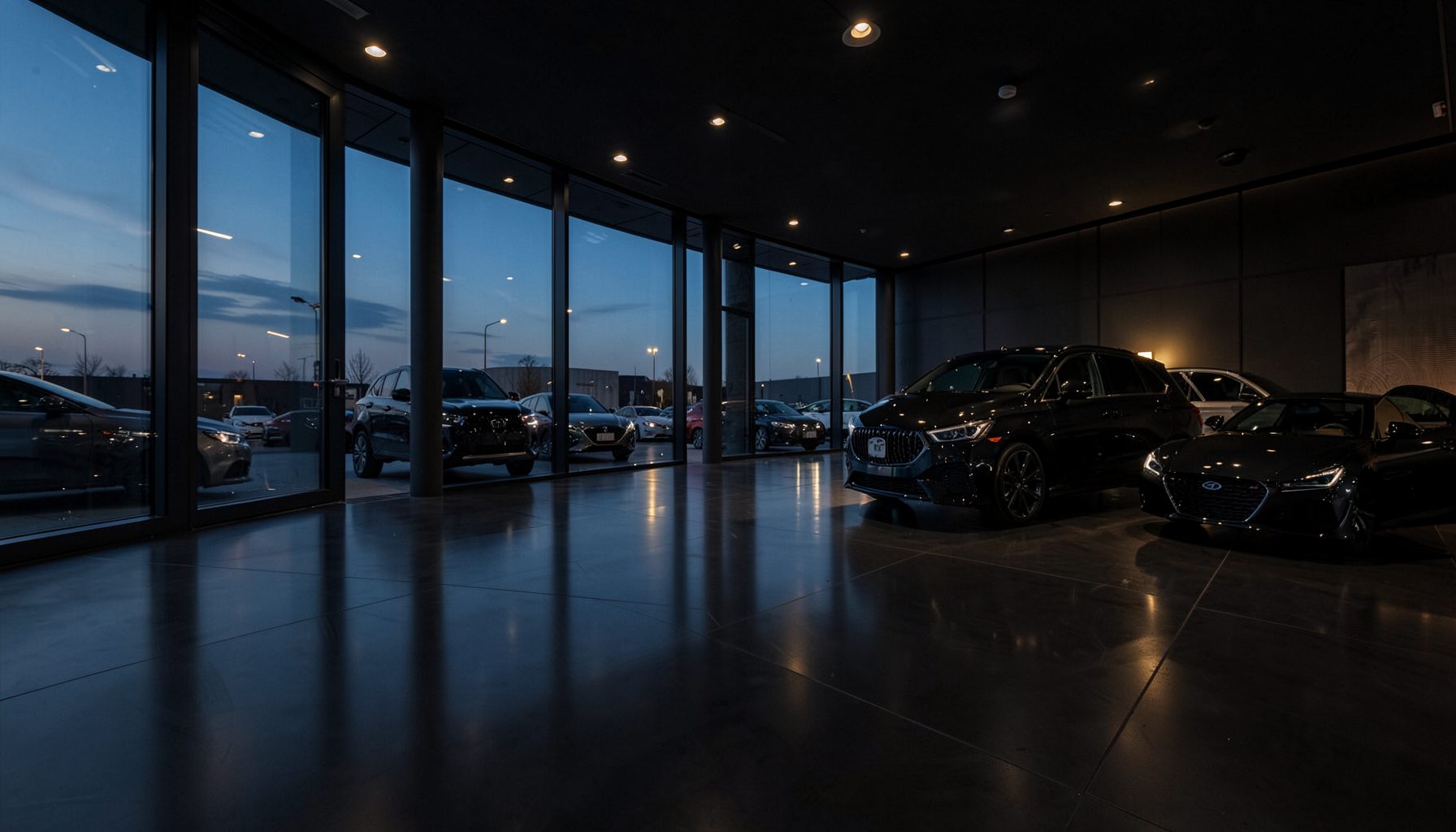
Why a demonstrator vehicle can be a smart buy
The advantages of buying a demonstrator vehicle from our lot begin with a useful balance: you can obtain a relatively recent model with modern equipment, while paying less than the price of an untouched new vehicle. At Alan Vines Automotive Group in Jackson, Tennessee, demonstrators may include vehicles used for test drives, showroom display, or short-term dealership duties.
For Australian buyers, the purchase requires a little extra checking. A vehicle coming from the United States may need import approval, compliance work, left-hand-drive assessment, duties, shipping, and registration arrangements before it can be driven legally in Australia. Even so, understanding how demonstrators are selected, priced, and maintained can help buyers compare opportunities intelligently, whether they are purchasing locally or assessing an overseas vehicle.
A newer vehicle at a more approachable price
A demonstrator has usually spent much of its early life being shown to customers rather than serving as a long-term private vehicle. That limited use can lead to a lower asking price than an equivalent brand-new model. The saving may be especially appealing when comparing well-equipped SUVs, four-wheel drives, utes, and family vans.
The reduced price does not necessarily mean the vehicle is outdated. A demonstrator from Dodge, Jeep, Ram, Mitsubishi, Chrysler, or Hyundai may still offer current safety systems, smartphone connectivity, efficient drivetrains, and the comfort features buyers expect from a new vehicle. The exact saving depends on mileage, age, specification, condition, and available dealer promotions.
Australian shoppers are familiar with the idea of a near-new vehicle being advertised as a demo. Local dealers often register demonstrators before sale, which can affect warranty timing and the vehicle’s recorded ownership history. That makes it important to check the build date, registration date, warranty commencement, and odometer reading rather than judging the deal by the word “new” alone.
A clear record of early use
One of the strongest benefits of a dealership demonstrator is that its initial use is usually easier to understand than the history of an ordinary used car. Dealership staff can often explain whether it was driven mainly for short test drives, used as a display vehicle, or assigned to a manager. A service file, inspection record, and vehicle history report add further confidence.
Test-drive use still deserves careful inspection. Different people may drive a demonstrator, and some may be unfamiliar with the vehicle’s controls or dimensions. Examine the tyres, wheels, seats, steering wheel, door edges, cargo area, and underbody for signs of careless treatment. Confirm that warning lights are absent and that all keys, manuals, charging equipment, and accessories are included.
For an Australian buyer, the vehicle identification number is central to the research process. It helps establish whether the car has been written off, recalled, flood-damaged, or previously registered. A US-market vehicle may also have specifications that differ from the Australian version, including lighting, emissions equipment, child-seat anchorage arrangements, infotainment functions, and safety certification. Those differences should be settled before transport or payment.
Equipment that has already been chosen
A demonstrator is often ordered to attract attention in a showroom, so it may have a stronger specification than the most basic version. Buyers can gain features such as leather or upgraded trim, a larger multimedia screen, heated seats, towing equipment, a premium audio system, driver-assistance technology, or a more capable four-wheel-drive system without paying the full price of a factory-fresh example.
The benefit is practical as well as financial. A Ram or Jeep with the right towing package may suit a caravan owner, while a Hyundai or Mitsubishi SUV with advanced safety equipment can be useful for school runs, commuting, and weekend travel. A demonstrator also allows buyers to inspect the actual colour, cabin finish, wheel design, and storage layout instead of relying on brochure images.
Digital displays deserve a close look during inspection. Check the operation of warning messages, parking sensors, cameras, navigation, climate controls, and driver-assistance settings. Visual cues can affect how quickly a driver understands a vehicle’s status; even this broader visual symbol guide illustrates why clear icons and progression signals matter when assessing an interface.
A chance to assess real-world comfort
A short test drive in a demonstrator can reveal more than a static showroom inspection. Buyers can listen for tyre or suspension noise, assess braking response, observe gearbox behaviour, and see whether the driving position remains comfortable after extended time behind the wheel. This is particularly valuable with larger SUVs, utes, and vans, where visibility and manoeuvrability matter every day.
The vehicle’s intended use should guide the assessment. A tradie may focus on tray access, payload information, towing stability, and cabin durability. A family may give greater attention to rear-seat space, pram storage, climate control, and easy-clean surfaces. Someone living in regional Australia may care about ground clearance, spare-wheel access, and highway comfort across long distances.
Road conditions vary widely from the suburbs of Sydney and Melbourne to gravel routes near regional centres and long stretches outside Perth or Darwin. A US demonstrator may be built for broad roads and different traffic patterns, so the buyer must consider steering position, lane markings, lighting rules, and local compliance. A vehicle that feels excellent on a Tennessee test route still needs to suit Australian roads and regulations.
Easier budgeting and ownership planning
A lower purchase price can reduce the amount borrowed, the size of monthly repayments, or the cash required at settlement. Alan Vines Automotive Group provides online inventory browsing, finance assistance, trade-in support, vehicle valuation tools, and special offers, allowing shoppers to compare the full cost rather than focusing only on the advertised figure. The Alan Vines inventory can also help buyers review available models and specifications before speaking with the dealership.
The real budget should include registration, insurance, delivery, inspection, currency conversion, import charges, compliance work, and any modifications required for Australian use. Stamp duty and registration costs differ between New South Wales, Victoria, Queensland, Western Australia, South Australia, Tasmania, the Australian Capital Territory, and the Northern Territory. A price that looks attractive in US dollars can change significantly once these expenses are included.
Trade-in value can also influence the final result. A dealership valuation may provide a simpler transaction than selling an existing vehicle privately, although buyers should compare both options. Finance terms depend on approval, vehicle age, mileage, borrower circumstances, and lender policy. Any three-day money-back arrangement should be reviewed carefully, including eligibility, return conditions, mileage limits, and whether it applies to a particular demonstrator.
Maintenance support that protects the saving
A discounted purchase is most valuable when the vehicle is maintained properly after delivery. Ask for the recommended service schedule, completed work, outstanding campaigns, tyre condition, brake measurements, fluid checks, and any repairs carried out after test-drive use. Genuine parts and trained technicians can help preserve reliability, safety, and resale value.
Transmission condition deserves specific attention because repeated short drives, heavy towing, poor fluid condition, or neglected servicing can create expensive problems later. Guidance on transmission service savings explains why scheduled maintenance can cost less than repairing avoidable damage. The appropriate interval depends on the model, transmission type, operating conditions, and manufacturer instructions.
Australian owners should also confirm who will perform warranty work if the vehicle is exported from the United States. Warranty coverage may be limited by country, registration status, or the ability to obtain approved parts. A local specialist may be needed for servicing or compliance, while some US-specific components could take longer to source. These details are part of the ownership calculation, not minor paperwork.
A demonstrator makes the most sense when the vehicle’s history, condition, specification, warranty position, and total delivered cost are all clear. It can provide near-new comfort and technology with a useful reduction in price, while a proper inspection protects against surprises. For an Australian buyer, the key point to remember is simple: the best demonstrator deal is the one whose saving remains worthwhile after compliance, ownership, and servicing costs are fully understood.